What shapes your Google rating, and what pubs can do about it
Google doesn't publish how ratings work, but the patterns are clear. Five practical, policy-safe ways for pubs, bars and restaurants to earn better reviews.
For a lot of guests, your Google rating is the first impression of your pub, bar or restaurant. Whether you run one venue or marketing for a group of them, this guide covers how to earn more good reviews without breaking Google's rules.
Why your reviews matter beyond the stars
Google is open about reviews feeding into local search. Its guide to local ranking says results are mainly based on relevance, distance and prominence, and that "more reviews and positive ratings can help your business's local ranking". In the same guide, Google says there's no way to pay for a better ranking and that it keeps the details of the algorithm confidential.
So nobody outside Google knows the exact formula behind your stars. What follows are patterns that are widely observed across the industry, alongside what Google's own help pages and policies say.
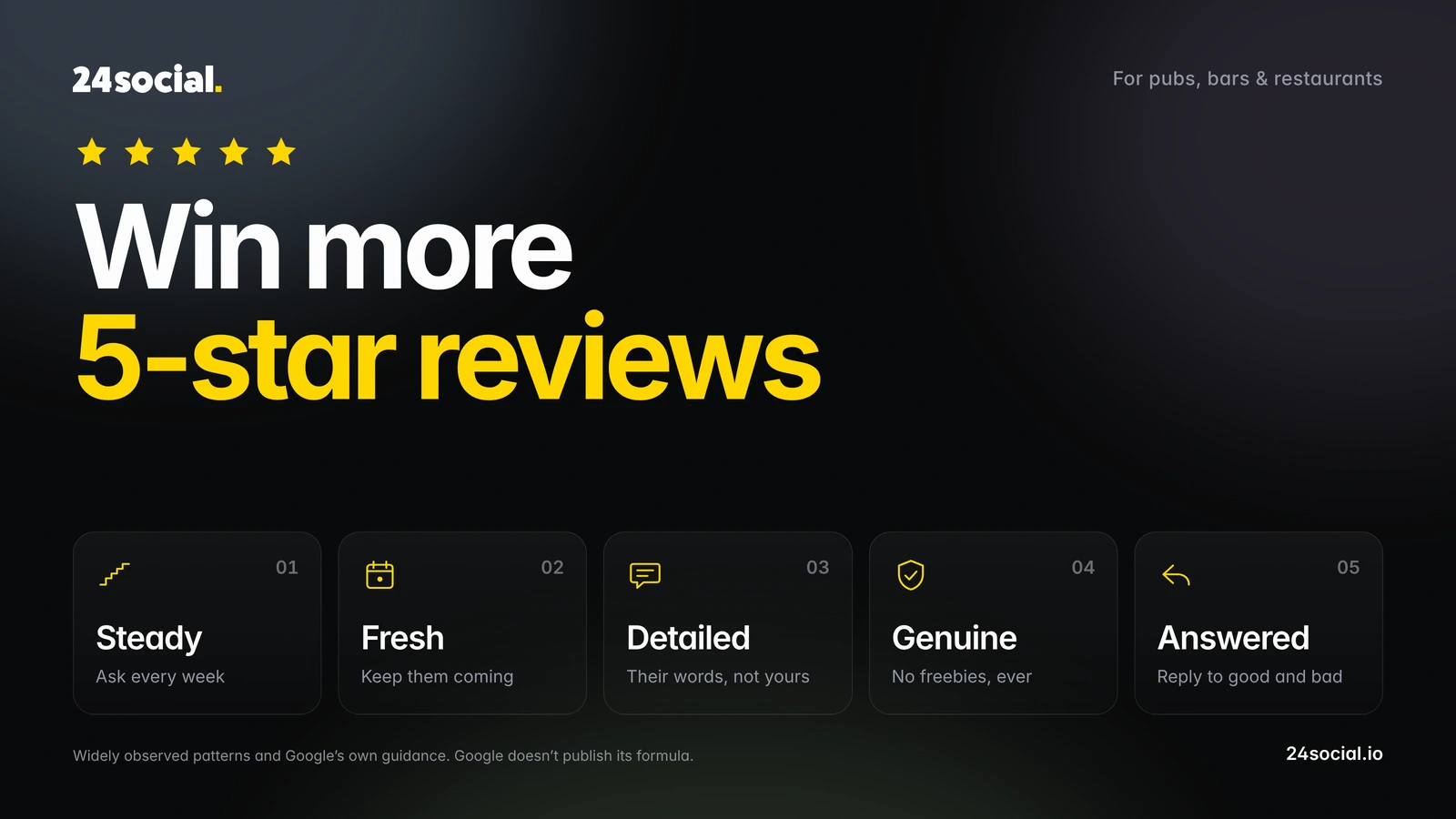
1. A steady flow beats a sudden burst
Ten reviews a month, every month, looks like a busy, well-liked venue. Fifty in one weekend after a staff push looks like something else. Google's review policy says it removes content showing "unusual volumes or patterns" that suggest someone is trying to manipulate a rating.
What to do: make asking a habit, not a campaign. Google lets you create a review link or QR code for your Business Profile. Put it where guests naturally pause: on the bill, on a table card or in the follow-up email after a booking.
2. Recent reviews count with guests
A glowing review from two summers ago says little about tonight's Sunday roast. Guests can sort your reviews by newest, and they notice when the latest ones are months old.
What to do: keep the steady flow going through quiet months as well as busy ones. A new menu, a refurb or a new kitchen team is a good reason to remind regulars that you'd value their honest feedback.
3. Detail helps guests decide
A written review that mentions the beer garden, the dog-friendly bar or the gluten-free options does more for a guest choosing where to go than a star on its own. Google's own advice is to value all reviews, noting that "a mix of positive and negative feedback often feels more trustworthy".
What to do: ask guests to say what they thought, in their own words. Don't suggest specific phrases, dishes or staff names to include. Google's policy doesn't allow businesses to request specific content in reviews.
4. Genuine reviews are the only safe kind
Google's policy is clear. You can ask guests for reviews, but you can't:
- offer anything in return, such as a free drink, a discount or a prize draw entry
- only ask guests you think are happy, or discourage negative reviews
- pressure guests to leave a review while they're still on the premises
- set staff targets for a number of reviews, or ask for reviews that name a staff member
Google's tips to get more reviews say incentivised reviews count as fake engagement and are "strictly prohibited". In the UK, the Digital Markets, Competition and Consumers Act has also banned fake reviews and reviews that hide an incentive since 6 April 2025. Buying reviews, or trading them with another business, isn't worth the risk.
5. Replies show you're listening
Google's local ranking guide says that replying to reviews shows you value feedback, and that helpful replies can help your business stand out.
What to do:
- Reply promptly, keep it short and sign off with your name or initials.
- For a bad review, apologise where it's deserved, explain what you can and can't control, and invite the guest to get in touch directly. Never share their personal details.
- Don't offer a freebie in a reply in return for changing a review.
- If a review breaks Google's content policies, flag it rather than arguing in public.
The facts behind the reviews
Some of the most avoidable bad reviews start with a fact that was wrong online: the kitchen closed earlier than Google said, or the menu had changed. Google also says that businesses with complete, accurate information are more likely to show up in local search.
Keep your Business Profile's hours, special opening hours, menu, photos and attributes, such as parking or Wi-Fi, up to date, and make sure your own website says the same thing. With Christmas coming, our Boxing Day hours check is a good place to start.
Keep your venue facts right with 24social
Running an independent pub, bar or restaurant? My Place gives landlords and pub managers a website that's optimised for bookings out of the box, live in minutes. Generate your website.
Managing websites for a group of venues? 24social Enterprise is one headless platform for pub companies and multi-site groups to run every brand, collection and venue website from a single place. Hours, menus, events and offers sit in one editor and are published to the sites that need them. Explore Enterprise or contact us.